













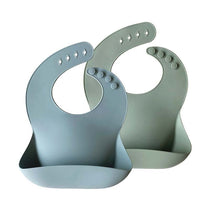










































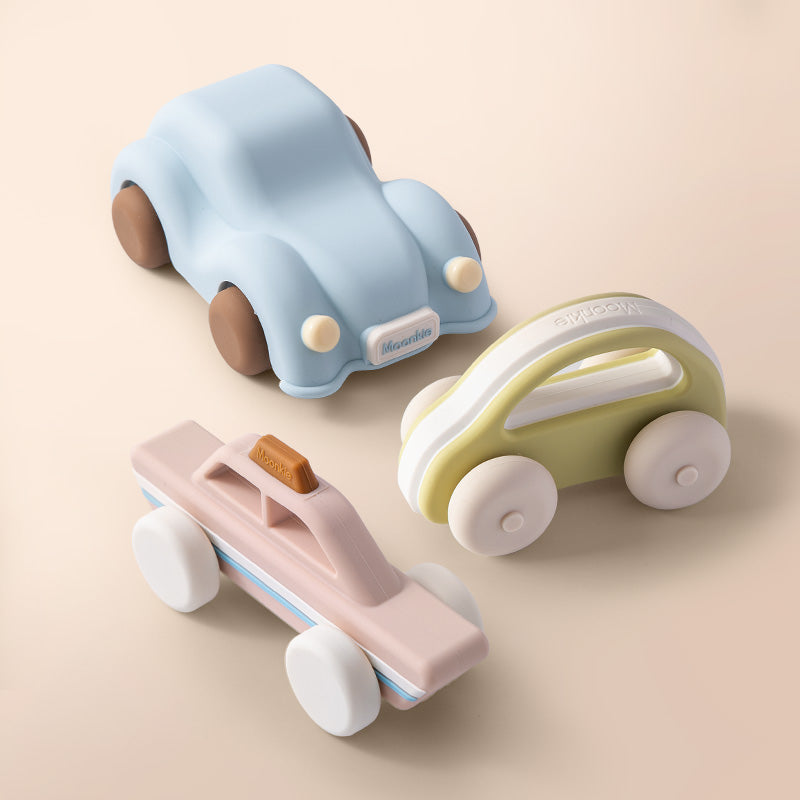




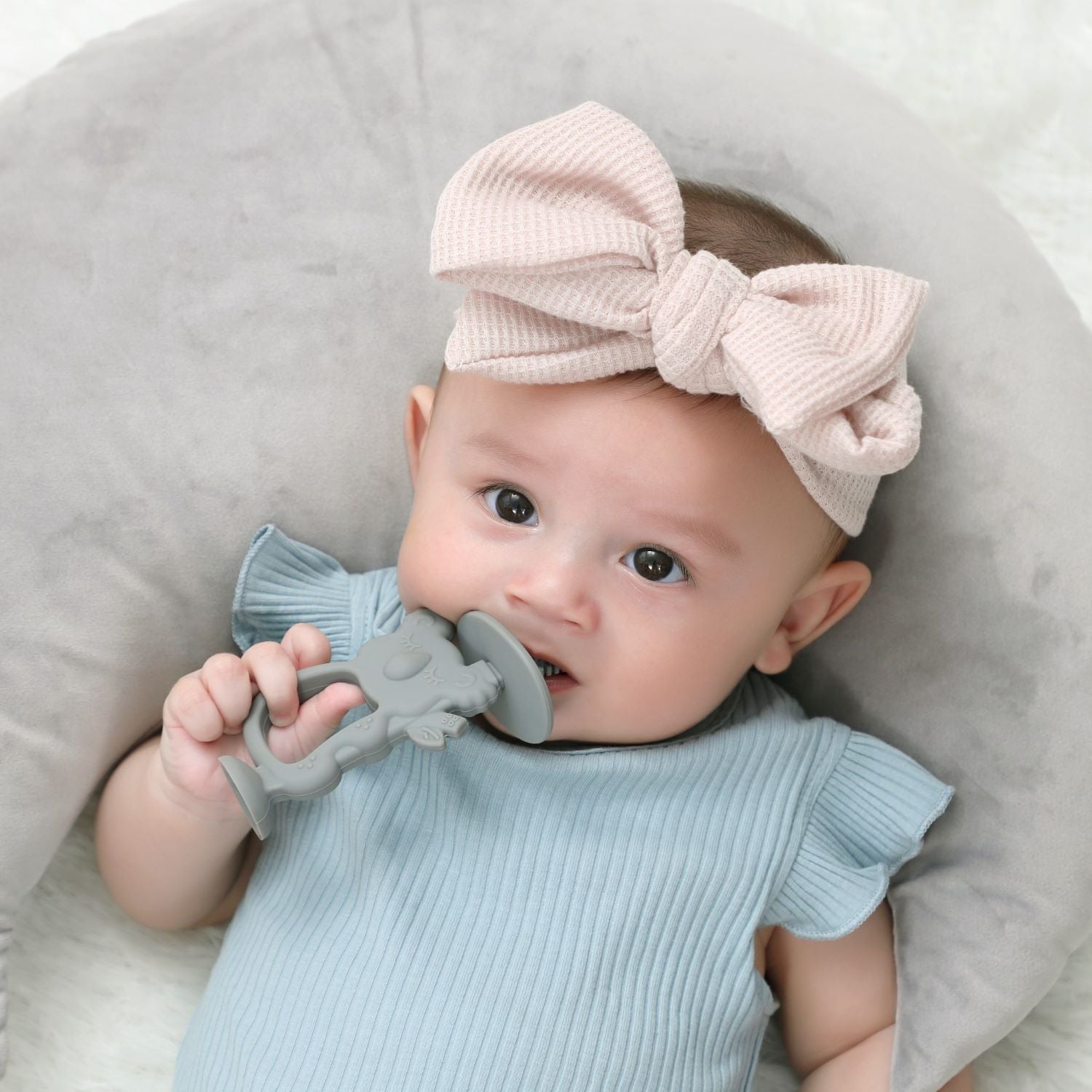
As a parent, you want to provide your baby with the best toys to support their growth and development. With so many options on the market, knowing which materials are safe and beneficial for your child can be challenging.
Some parents may not realize that different grades of silicone may be used in the products they already have in their homes. You should know exactly what materials make up the products that your baby is coming in contact with, especially the items your little one chews on!
This guide describes the various types of silicone in baby products (and why food-grade and higher is essential for baby safety), weighs the pros and cons of silicone against other baby product materials, and lists a few silicone baby products that just make sense.
In This Article
What Is Silicone?
Silicone is a synthetic rubber-like material made from silicon (made from sand — one of Earth's most abundant resources), oxygen, carbon, and hydrogen. More specifically, silicon is reacted with methyl chloride, then with water, to produce silicone polymers that are incredibly resistant to both high and low temperatures.
Non-toxic, odorless, tasteless, durable, and safe, silicone is a favorite material choice for the medical and food industries. In particular, resistance to temperature makes silicones useful in everything from health care to textiles to transportation to electronics (source).
Construction, tools, cooking, kid toys, a Mars rover — you name it—a type of silicone is likely already employed in that context. But why? Simply put, silicones can withstand a lot of heat, cold, and ultraviolet radiation, while also being flexible and moisture-resistant (source).
Even more impressive is that the flexibility of different silicones allows them to replace less sustainably produced materials in vehicles, electronics, solar panels, keyboards, cell phones, and many, many other modern, everyday conveniences.
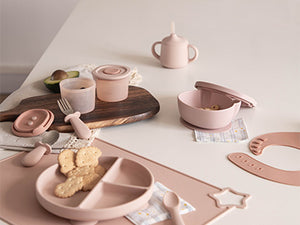
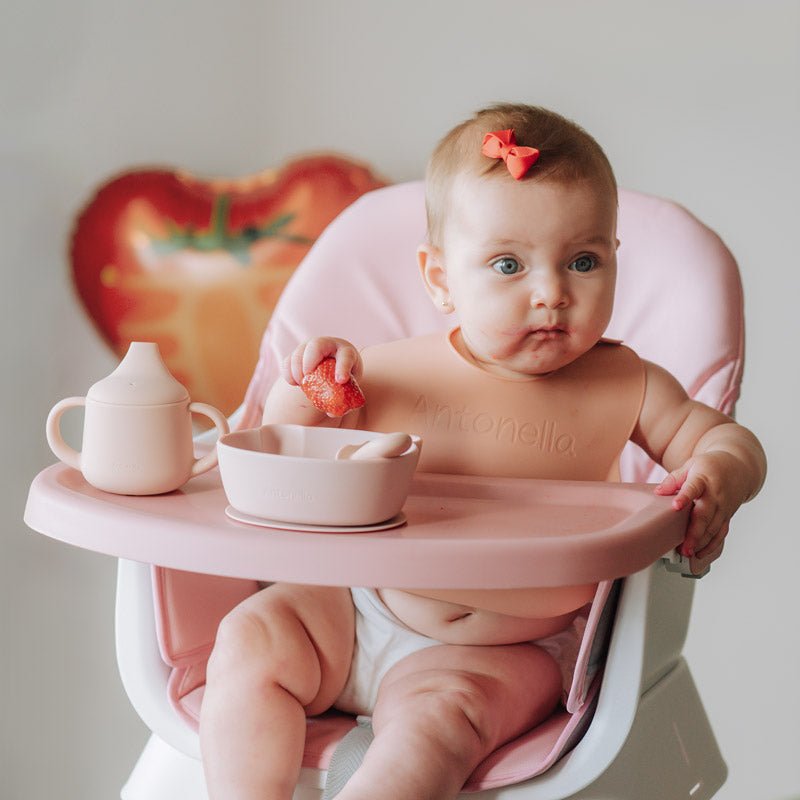
But why is silicone used in baby products? Silicone is also heat-resistant, waterproof, and easy to clean, making it an ideal material for baby toys undergoing unending dishwasher cycles and sterilization.
WARNING: Not all silicones are created equal. When looking at a silicone baby toy, check for certifications of high-quality, food-grade silicone.
Is Silicone Safe for Humans?
Study after study has shown that silicone is indeed safe for humans, from silicone teethers and bottle nipples for babies to surgical implants and cookware (source).
Though made of silica dug from the Earth, one should consider silicone to be something between synthetic rubber and a synthetic plastic polymer due to how it is created. That's because factories must process the silica to form silicon, which, after more processing, becomes siloxane (silicone).
Moreover, the backbone structure of silicone consists of silicon, oxygen, and hydrocarbons, not purely organic material. But this is precisely what makes silicones stable: they don't break down easily.
Silicone stability is highly sought after in the medical field, where it is critical that implants and equipment not chemically degrade during an operation or medical procedure. And no one wants anything leaching into a person's bloodstream, either.
Some silicones are not suitable for human health, particularly low-molecular-weight silicones or high-quality silicone that has been filled or mixed with low-quality silicone. Such silicones can actually seep through your skin and build up in your system, but are still considered either totally non-toxic or toxic to a very low degree (source).
Which Silicone Grades Are Safe for Infants?
High-quality silicones, which are high-molecular-weight silicones free of impurities, are considered safe for the medical field. You can also call these "medical-grade silicones."
FDA-Grade Silicone
A step below is food-grade silicones or FDA-Grade silicone, rated for their stability in cooking and food processing (source).
FDA or food-grade silicone is characterized by the following:
being extremely heat-resistant
non-toxic
resistant to damage
easily conforms to different shapes and sizes
being dishwasher and microwave safe
LFGB-Grade Silicone
When you’re looking for the highest-quality silicones, LFGB-grade is at the top of the list. It is considered the gold standard for food safety in Europe. LFGB stands for Lebensmittel- und Futtermittelgesetzbuch, which is German for "Foods, Consumer Goods, and Feedstuffs Code."
LFGB silicone is mainly used throughout Europe, specifically in Germany and France. It is tested more thoroughly than FDA-grade silicone to ensure that no dangerous chemicals are released into food when products are used.
Platinum-Grade Silicone
If you hear someone talking about platinum-grade silicone, they are referring to silicone that uses platinum as a catalyst during its curing. This leads to a durable, food-safe material, which is why platinum-grade silicone is considered one of the highest-quality silicones around.
It is also one of the more expensive types of silicone, which is why you won’t find it in cheaply made products. Platinum-grade silicone is not cured with peroxide, making it the purest silicone available.
Platinum-grade silicone is used in food-safe products, medical devices, and mold-making. Similar to food-grade silicone and LFGB-grade silicone, platinum-grade silicone can withstand a wide range of temperatures, is extremely durable, and produces no harmful byproducts, making it optimal for use in baby products.
All grades of medical and food-grade silicones are common in baby products, teethers, toys, and bottles for their ability to withstand heat sterilization and repeated cleaning over time without leaching chemicals.
The catch is that there are varying levels of food-grade silicones. Not every silicone kitchen utensil holds up for long — some of us know this disappointingly well. Isn't the same true for silicone baby products? Yep.
Pros of Silicone Baby Toys
The pros of silicone baby toys are plentiful! Silicone is durable, flexible, easy to grip, and easy to clean.
Here is a list of silicone baby toy pros, along with a quick comparison to other common materials.
Safety
One of the main advantages of silicone baby toys is that they are non-toxic and safe. Unlike plastic toys, silicone toys do not contain any harmful chemicals such as BPA, phthalates, or PVC.
Compared to wooden baby toys, silicone toys hold up much better to little teeth because they don't dent or splinter when chewed on.
The closest comparison to silicone baby toys is natural rubber, which, though natural, eco-friendly, and softer, does not stand up to silicone's durability and cleanliness standards.
For example, natural rubber is not nearly as temperature-resistant as silicone and can slowly reform over time (especially in pacifiers). Moreover, natural rubber doesn't last as long as silicone, as it begins to peel or become sticky with wear and tear, especially on rubber teethers and pacifiers.
And if you or your little one has a latex allergy, natural rubber baby toys, teethers, and pacifiers may cause issues.
Cleanliness
Silicone baby toys are outstanding for cleanliness because they are odor and stain-resistant, hypoallergenic, and easy to clean. You can simply wash them with soap and warm water or put them into the dishwasher.
If you have furry family members at home, their hair will not stick to your little one's silicone baby toys. Did they get left outside for a couple of days? No problem!
Should your dog or cat chew on your baby's silicone toys, don't worry! Give them a good wash or boil them for five minutes on the stove to sterilize them. Once cool and dry, your baby can have them back!
Even better, silicone baby toys are less likely to mold or harbor bacteria, making them a hygienic choice for your baby.
Wooden and plastic toys just cannot be cleaned as well as silicone. With too much cleaning, wooden blocks will either chip off paint or soak up water. Plastic toys cannot withstand heated cleaning or sterilization without weakening or leaching chemicals.
Durability and Versatility
Silicone baby toys resist damage and can withstand rough play and chewing. They are less likely to break or crack than plastic or wooden toys, which means they will last longer and save you money in the long run.
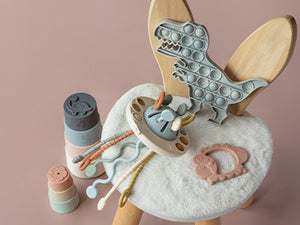
Silicone can be molded into all kinds of shapes and textures, making it practical for different stages of development. To read more on what works for each early stage of your little one's development, read our article From Teething to Tummy Time: The Top Sensory Toys for Every Stage of Babyhood.
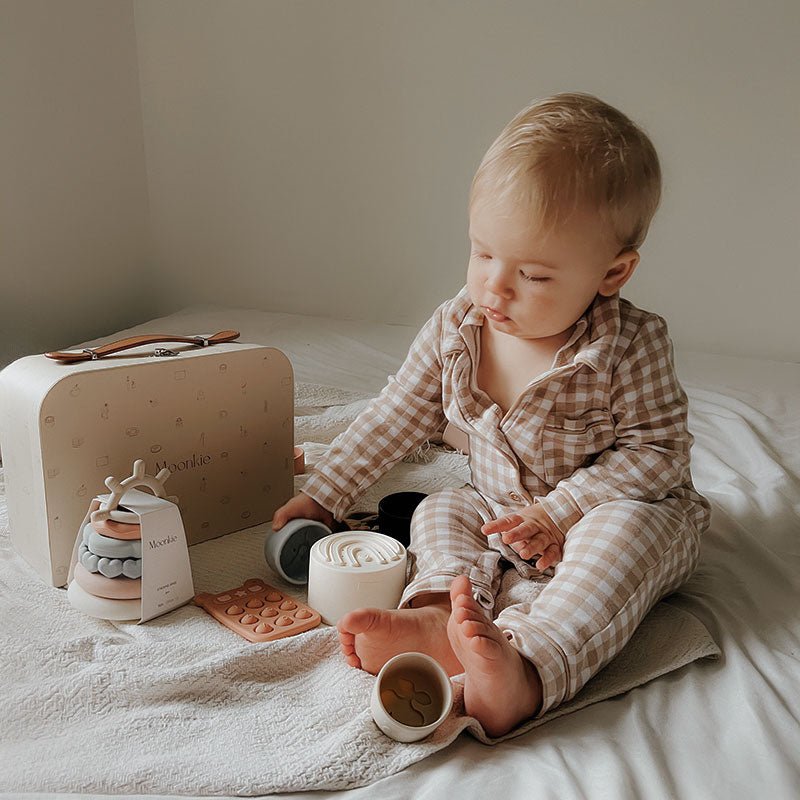
By carefully choosing baby toy designs, you can have a set of silicone baby toys that your infant can explore early on, teeth on in her teething stage, stack as a crawler, carry around as a toddler, and build with as a young child. This long-lasting fun and versatility are among our joys in designing Moonkie silicone baby toys.
If your pet punctures a toy, however, you should replace it to avoid hiding spots for bacteria and to keep your curious little one from digging into those holes when more adept and able to break off little pieces.
Soft and Gentle
Silicone baby toys are soft and gentle to touch, making them ideal for teething babies. They are also less likely to cause injury if your little one accidentally hits himself or someone else with the toy.
The softness also makes silicone baby toys exceptionally graspable for tiny hands, which helps build hand-eye coordination and hand muscles.
Cons of Silicone Baby Toys
No guide on silicone baby toys would be complete without a quick overview of the cons of silicone baby toys. Knowing the facts will help you weigh what is best for your baby.
Here are a few common cons parents have for silicone baby toys.
Cost
One of the main drawbacks of silicone baby toys is that they can be more expensive than other types of toys. Silicone is a high-quality, durable, and safe material for babies (and the higher the grade, the more costly it is).
However, the cost of silicone baby toys is justified by the fact that you will not need to replace them as often. If you intend to have more children, silicone is the way to go!
Learn more about balancing sustainability, durability, and cost on a budget in Sustainable Baby Toys on a Budget: Affordable Options for Eco-Conscious Parents.
Not Eco-Friendly
Silicone baby toys are not eco-friendly because they are not biodegradable. This means they will not decompose and will remain in landfills for a long time. This concerns environmentally conscious parents who want to reduce their carbon footprint.
The counter to this is, of course, the durability of the silicone baby toy. You can get years of entertainment for multiple kids out of one silicone baby toy. And, if it has no pockmarks, punctures, or cracks, then you can pass it along to a new family once your kids have outgrown it.
If a silicone baby toy does become damaged, you can take it to a special recycling facility. You cannot put it in your regular recycling because it requires a specialized process that most recycling facilities do not offer. You can call your local recycling center for options locally, or mail your used silicone to a silicone recycling program.
Unfortunately, silicone can only be recycled a certain number of times and loses quality with each recycle. However, it can be ground into a coarse powder and used in playground mats, track surfaces, or machine oil.
Chemical Fillers
Not all silicone baby toys are created equal. Some are mixed with lower-grade silicone to keep manufacturing costs down, or filled with a silicone gel for teething. Both of these are unsafe for your little one.
As mentioned earlier, "food-grade" and "medical-grade" silicone are the safest grades for humans. They are the most durable, free of impurities, temperature-resistant, and less likely to release siloxanes into the body.
Silicone gel fillers for gel teethers are comfortable for teething babies and, after chilling in the fridge for 30 minutes, even make a cool teething treat for sore gums. However, if your little one manages to puncture the outer silicone (which would be surprising), he would likely ingest some of that gel.
If your baby prefers silicone gel teethers, make sure you keep a close eye on him to avoid anything like that happening!
Heats Up
Silicone toys can become hot if left in direct sunlight or near a heat source for a prolonged period. So, if your little one grabs a hot toy, it will be an unpleasant surprise!
To avoid this, make sure silicone toys are brought inside soon after playing outdoors or riding in the car. Furthermore, never directly place them on a stove, furnace, or other heating element!
You can boil silicone baby toys and teethers on the stove for up to 5 minutes, but make sure they cool down before giving them back to your baby.
Potential for Choking
As with any toy, there is a risk of choking if a baby manages to bite off a piece of the toy. You can get around this by choosing smart designs: no small parts to bite off, texturing that doesn't stand tall, and no small individual pieces.
For this reason, teething jewelry is a bad idea!
Comparison to Other Materials
In comparison to other baby toy materials, silicone is simply excellent. Moreover, when properly cared for, it's the best in nearly every category combined!
Check out this chart to see what we mean:
Category |
Wood |
Rubber |
Plastic |
Silicone |
Safe |
✓ |
✓ |
✓ |
|
Easy to Clean |
✓ |
✓ |
✓ |
|
Durable |
✓ |
|||
Versatile |
✓ |
✓ |
✓ |
✓ |
Cost |
✓ |
✓ |
✓ |
|
Eco-friendly |
✓ |
✓ |
Safe: How safe a toy is by common safety standards
Easy to Clean: Ease of cleaning thoroughly
Durable: A toy's unbreakability
Versatile: The range of designs, colors, and textures available
Cost: Cheap upfront or cheap cost-per-use (i.e., greater durability is cheaper with more uses)
Eco-friendly: Biodegradability or recyclability
Silicone vs. Wooden Baby Toys
We all know plastic is not the best material for a baby to chew on, yet baby toy shelves are full of plastic toys. What about wooden baby toys? Why are they not dominating baby toy shelves in stores? And if silicone is so fantastic, why are there not more silicone baby toys in stores?
As far as stores go, what you see on shelves is what sells with the highest margins. Plastic toys are cheaply made and break more easily than wooden or silicone toys, so they need to be replaced more often.
Wooden and high-quality food-grade silicone baby toys are expensive to make and ship (because they are heavier). So, retail stores often brandish a large selection of plastic toys but a small selection of wooden or quality silicone toys.
The Nitty Gritty of Wooden vs. Silicone Baby Toys
When choosing between silicone and wooden baby toys, however, there are several points to consider:
Quality |
Wooden Toys |
Silicone Toys |
Versatility |
✓ |
✓ |
Sensory Experience |
✓ |
✓ |
Developmental Benefits |
✓ |
✓ |
Ease of Cleaning |
✓ |
|
Safety |
✓ |
|
Durability |
✓ |
|
Teething Tolerance |
✓ |
|
Sustainably Made |
✓ |
|
Recyclable |
✓ |
✓ |
Both wooden and silicone baby toys come in a variety of shapes, sizes, weights, hardness, textures, and patterns, making these materials wonderfully versatile and an excellent sensory experience for little ones. Each material also provides developmental benefits in fine motor skills.
That's where the similarities end, though. Wooden toys just don't wash as easily or to the same temperatures as silicone does. You just cannot make wooden toys as squeaky clean as silicone baby toys. Learn more about how to clean wooden toys in The Dos and Don'ts of Disinfecting Baby Toys: A Comprehensive Guide.
A well-designed wooden toy is also more dangerous than a well-designed silicone baby toy because its pieces can splinter off, sore gums won't get any give, and the wood paint or finish can leach chemicals. In the teething stages, those little teeth will leave tiny dents in wooden toys that can harbor bacteria or start splinters later on.
High-quality, food-grade silicone baby toys are more durable than wooden toys overall. Heat, freezing, boiling, dishwashers, dropping, throwing, driving over, pet attack — you name it. Wooden toys cannot withstand toddler shenanigans as well as silicone toys, but design matters.
Check out some excellent silicone toddler toy options in Are Silicone Toys Durable Enough for Toddlers?
Silicone baby toys fail in comparison to wooden toys in being sustainably made. The process of making silicone is not eco-friendly, though it results in a product that can be used for years by multiple babies and toddlers. Moreover, they can only be recycled in special silicone recycling centers.
Paying Attention to Safety
As parents, we are so over hearing about safety standards and tend to default to an attitude of "if-it's-in-the-store-then-it's-probably-safe-enough." But when you look at statistics from the U.S. Consumer Product Safety Commission, you begin to realize how alert we need to be.
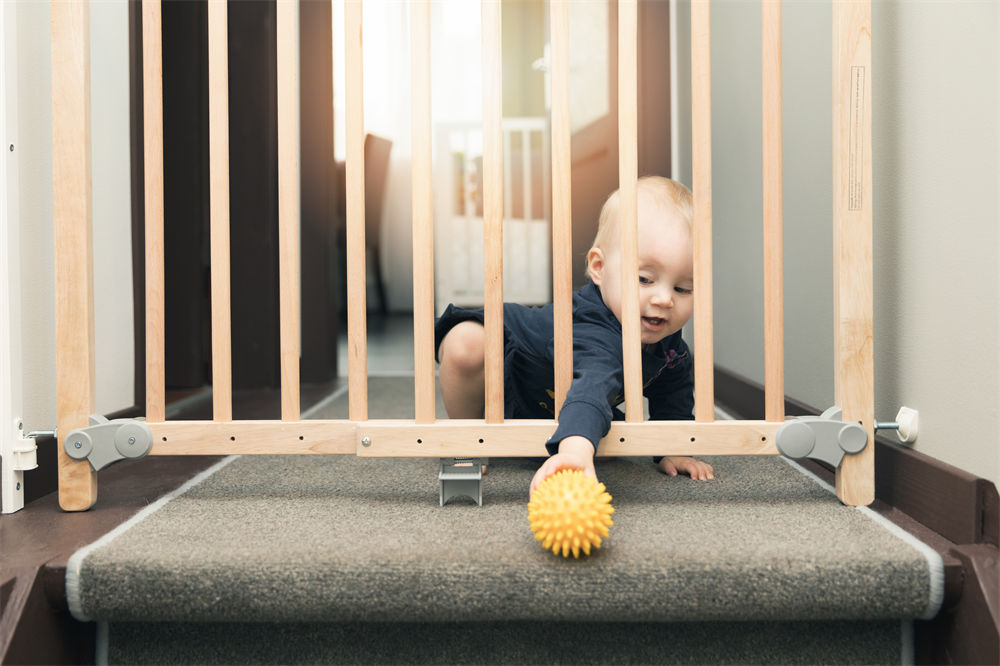
In 2022, there were 11 toy-related deaths reported of children fourteen years old and younger in the U.S. Five were from balls, while other incidents were from a scooter crash with a vehicle, an electric riding toy, a stuffed animal, a balloon, a tricycle, and toy magnets (source).
In the same year, there were an "estimated" 209,500 toy-related injuries for the same age group. The biggest culprit was the classic scooter — go figure (source).
On the one hand, these numbers are remarkable for a 2022 population of 59 million kids aged 0 to 14 (source). But remember, these are numbers from toys we are meant to have in our homes for kids to play with.
Regardless of the material you choose for your baby, ensure the design is well thought out. No loose pieces, no thin areas your baby or toddler can bite chunks off, and nothing that will pinch your wee one's little fingers.
Tips for Choosing and Using Silicone Baby Toys
Tips for choosing and using silicone baby toys come down to the silicone's grade, the toy's design, regular cleaning, and looking for signs of wear and tear.
A silicone baby toy is well worth the cost if you opt for a safe design that engages your little one at multiple stages of development and has no pieces that can be easily bitten off. Try as you might, your little one is bound to chew on each toy at some point.
As a general rule of thumb, washing your little one's silicone baby toys once a week with warm water and soap (or in the dishwasher) is a superb way to safeguard your baby's health and prevent bacterial buildup. More frequent washing is a good idea during cold and flu season or when you have other little friends visit.
Aside from the functional benefits of silicone baby toys, opt for toys designed to engage your baby's development. Montessori toys are well known for this, but they are often made from natural materials.
Can Silicone Toys Be Used in Montessori Education?
Yes and no. Montessori education toys are typically made from natural materials, but silicone is not. Silicone is synthetic, but it isn't plastic. The sheer range of textures, patterns, shapes, and weights of silicone baby toys, coupled with their durability, puts natural material toys to shame.
The whole point of designing Montessori education toys with natural materials is to provide simple, distraction-free learning through hands-on play. Focused play with natural materials helps ground a young child in authentic materials they can find outside.
Learn all about the Montessori Method and the philosophy behind its toy designs in Are Montessori Toys Better for My Baby?
Though you cannot find silicone outside naturally, you can provide a wide range of shapes, patterns, textures, and weights to feel and explore. Having a few of these long-lasting silicone baby toys around for your baby to gnaw on and play with is a fantastic asset to her Montessori-style education.
5 of Our Best Montessori-Approved Silicone Sensory Toys for Baby Development
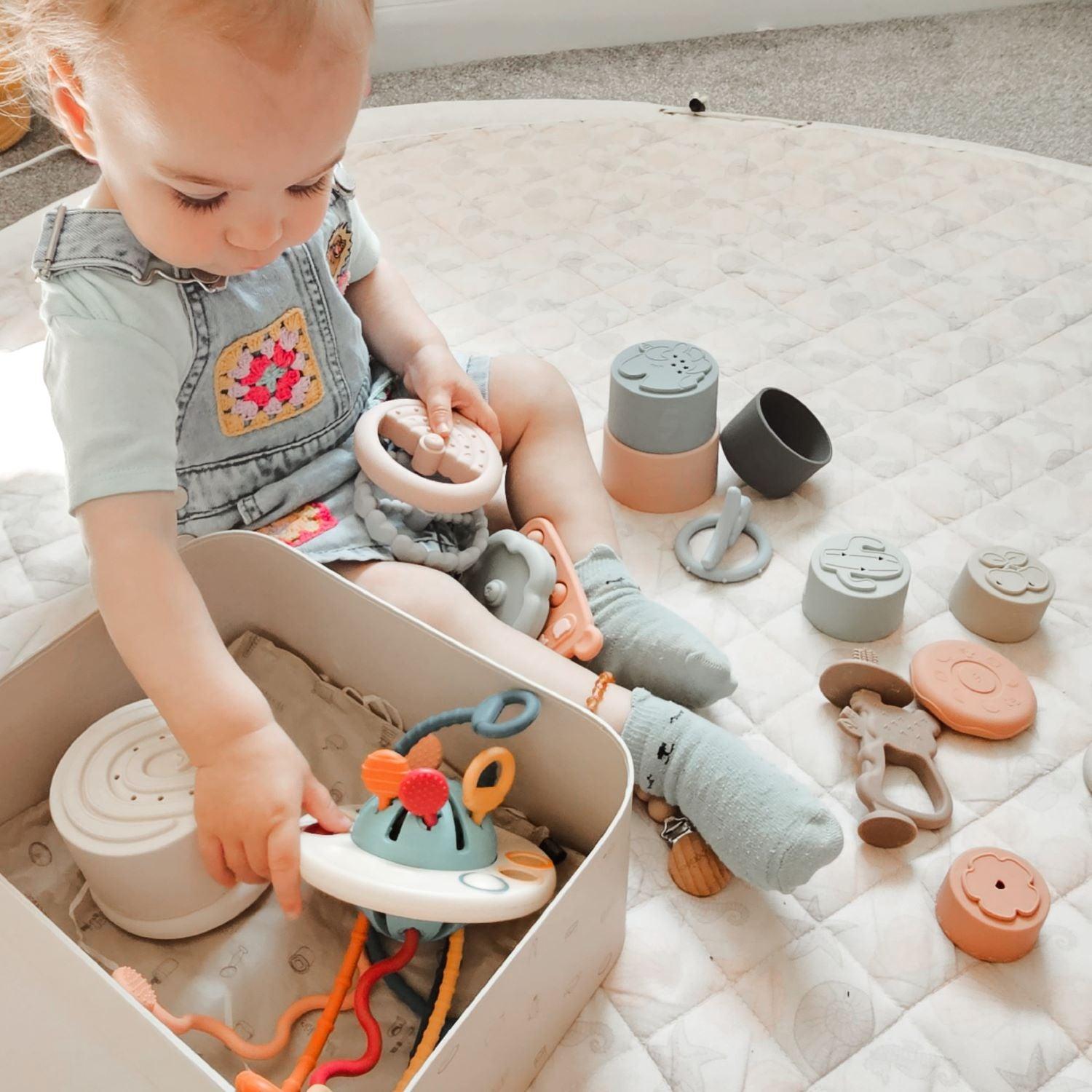
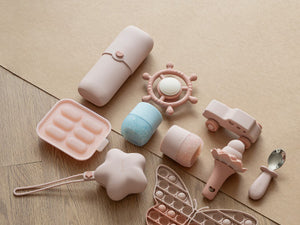
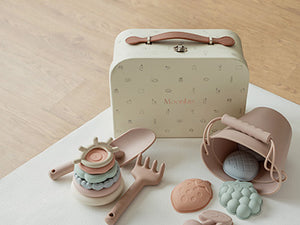
At Moonkie, we are excited about the flexibility, durability, and cleanliness of high-quality food-grade silicone for baby products! Investing tons of time and effort into creating the most thoughtful designs for little ones growing and learning worldwide, we've created some stellar silicone Montessori-inspired toys!
Here is a list of our favorites at Moonkie in no particular order:
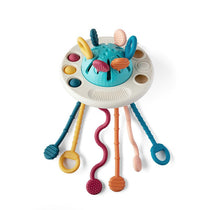
1. UFO Silicone Pulling Toy
Perfect for babies and toddlers, our UFO silicone pulling toy checks all the boxes for Montessori-inspired toys! It holds a little one's attention for long stretches because there's nothing else like it in a typical home.

Covered in several different textures and patterns, your little one will have a lot to do just by feeling the textures and chewing on this toy. But once your baby realizes he can pull the tabs to hear fascinating sounds, he'll get really excited!
Each silicone cord has a different pattern or shape that makes a unique sound when pulled through its slot. Don't worry; the cords cannot be pulled out of their slots. Our UFO toy engages the senses of sound, touch, and vision while also providing ample opportunities to practice grasping, pulling, and releasing skills.
2. Koala 2-in-1 Teether
Got a teething baby on your hands? Then consider investing in a teether that she will actually carry around and use! Our koala 2-in-1 teether is easy to grasp, gentle on sore gums, safe for chewing, and quick to clean.

We designed this teether with several textures for babies to explore with their mouths, but we also made it so your baby will soon default to holding it like a toothbrush. There's nothing like practicing brushing your teeth before actually having teeth to do the job well once you've got them!
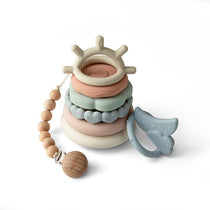
3. Stacking Teething Rings
Stacking rings are a classic baby toy that's been around for more than a minute. Wooden stacking rings were the standard until plastic became popular and affordable. Though wooden stacking rings are more durable than plastic ones, they succumb to wear and tear easily, especially as babies teethe.

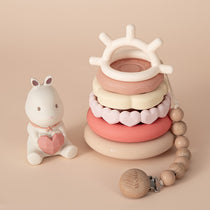
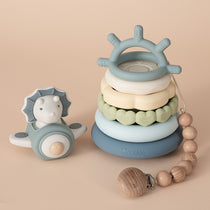
That's why we chose to make our stacking ring set do double duty as teethers! Our stacking teething ring set challenges and delights babies with varied textures and sizes that are easy to grasp, chew on, and stack.
If you are a bit leery about silicone baby teethers, read our article Are Silicone Baby Teethers Safe? What You Need to Know to learn more.
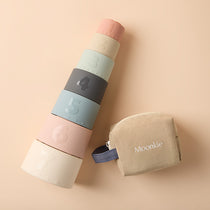
4. Stacking Cups
Yet another timeless classic, stacking cups are must-haves for babies and toddlers. They exercise your little one's spatial awareness, stacking skills, and hand-eye coordination, among other skills.

Moonkie's silicone stacking cups are silicone for durability, softness, feel, color, sound, cleanliness, and variety. Molded with a variety of shapes to feel on the tops and around the bottom, our silicone stacking cups are sure to entertain for years to come!
5. Silicone Phone Press Toy
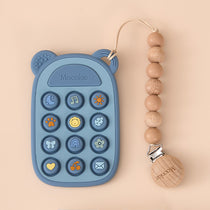
Have you seen those silicone press toys at the store? Some elementary kids become transfixed by these quiet popping toys, b ut we've designed ours specifically for tiny hands. Shaped like a little phone, your little one can play with this press toy instead of your phone!
As your baby inevitably becomes a toddler, you can play number recognition games where you tell your toddler a few numbers and check whether he presses them. The whole thing is safe for teething chompers, and you can toss it into the dishwasher in the evenings for hassle-free cleaning.
Montessori education focuses on child-led learning, so Montessori-inspired toys should prioritize the child in their design, materials, quality, and skill-building. Sensory toys are often lumped into Montessori education toy categories, but they are not always Montessori by nature.
Read "Are Montessori and Sensory Toys the Same Thing?" for a breakdown of the differences so you can purchase toys that align with your values and your little one's development.
Quick FAQ About Silicone Baby Products
Questions abound over silicone baby products: the smell when first opened, sterilization, how to clean them, and certification are among the top questions we receive from parents.
Here is a quick FAQ to highlight those pressing questions.
What Kinds of Baby Products Are Made of Silicone?
Thanks to its versatility, durability, nontoxicity, and temperature tolerance, silicone is commonly used to make baby products that withstand dishwashers, microwaves, chewing, sucking, and drops.
Items like these include:
baby bottle nipples
This list is just the tip of the iceberg! Check out a more practical guide to silicone products in 15 Must-Have Silicone Products for Parents.
Do Silicone Baby Products Smell?
Silicone is odorless on its own. However, some silicone products can develop a soapy smell or taste if soap residue (especially fragranced soap) clings to the surface. Some food oils can also cling to silicone.
Cleaning silicone products thoroughly after each use can help prevent this. Learn more about how to take care of your silicone baby products in The Dos and Don'ts of Disinfecting Baby Toys: A Comprehensive Guide.
Moonkie's 100% Platinum Food-Grade Silicone may have a slight chemical smell when unboxed. Our silicone is cured at high heat, then immediately sealed in airtight packaging for hygienic shipping, sometimes trapping the natural "curing" scent inside.
This is NOT the scent of toxic additives or chemical sprays on our silicone products; it's trapped air from our high-heat stabilization process.
How Can I Remove Unwanted Scents?
You can remove most unwanted scents from your high-quality silicone baby products (assuming they are made from 100% food-grade silicone) by boiling them in water for 5 minutes, then letting them air dry.
The heat helps remove scents left by oils on the surface of the silicone, but if the scent persists after boiling, then the product is not high-quality food-grade silicone.
In a Nutshell
Silicone baby toys can be a safe and durable option for parents looking for toys that support their child's development. However, as with any material, there are pros and cons to weigh when making your decision.
By understanding the benefits and drawbacks of silicone toys, you can make an informed choice that meets your child's needs and preferences.