

Babies can be pretty gross. They slobber and chew on anything they can reach. Of course, they don't know about germs or getting sick yet; they're just exploring! But for parents with one or more babies and toddlers at home, watching them put slobbery toys in their mouths can make you wonder, "How and how often should I clean these toys?"
Cleaning and disinfecting baby toys should be done once a week or whenever a toy is visibly dirty (source). However, depending on the material, baby toys must be cleaned differently. For example, wooden toys must be hand-washed and never soaked, while silicone toys can be soaked or boiled.
Having had four babies and toddlers in one house simultaneously for a few months (foster care), I know weekly toy cleaning is a massive undertaking, especially when there are many different cleaning instructions. Here is a comprehensive guide to answering all the questions!
How to Clean Baby Toys Safely
You can do the most basic cleaning in a kitchen sink with warm, soapy water (use Dawn dish soap or an equivalent). Toss in any plastic or silicone toys to soak, but don't submerge electric toys or toys with batteries (sleep deprivation will make you do dumb things at times).
Use a cloth to scrub and a toothbrush to get into any nooks or crannies. Then, rinse the toys and dry them on a dish rack or bath towel.
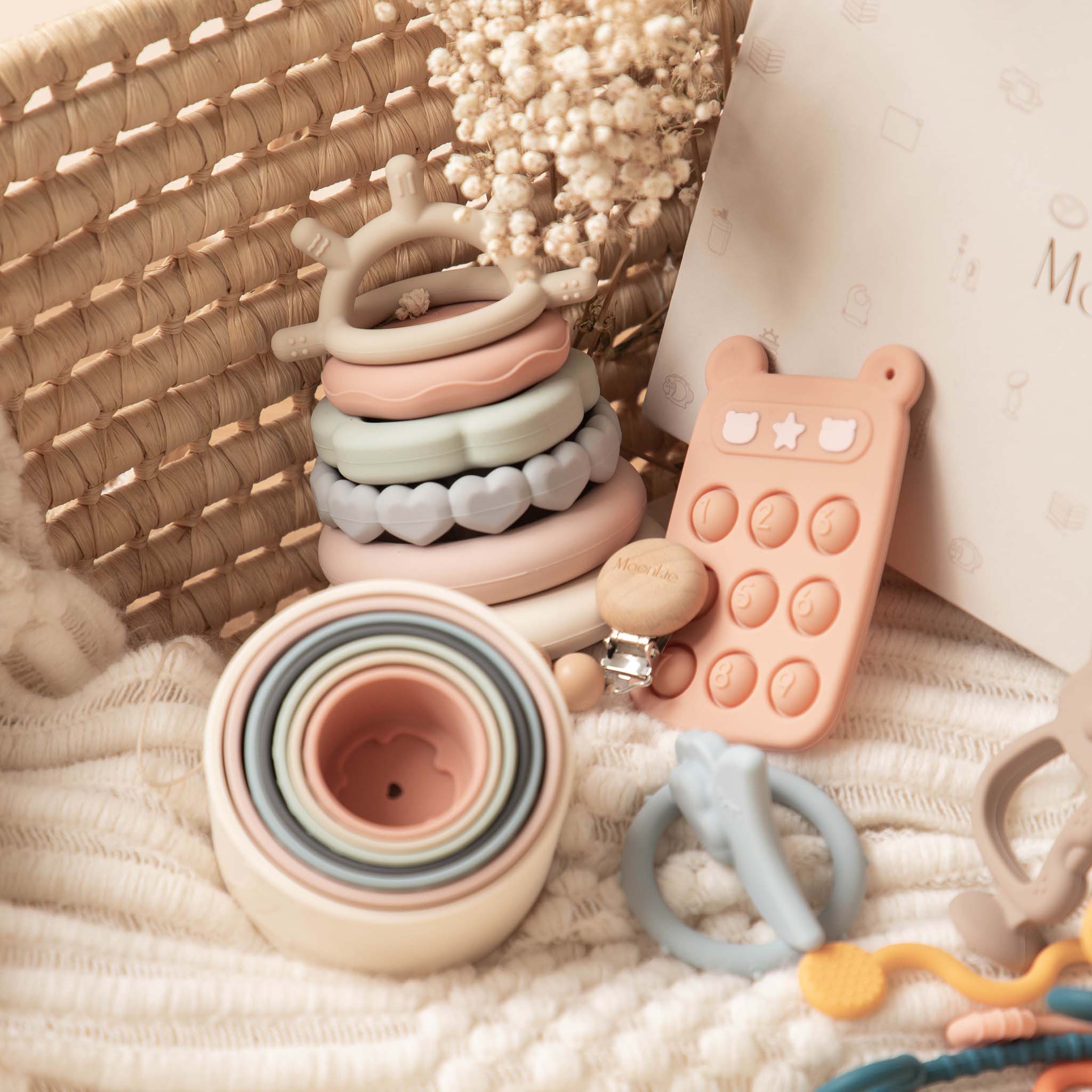
You can run high-quality, food-grade silicone baby toys through the dishwasher on the top rack or boil them for up to 5 minutes, making cleaning silicone teethers every evening a breeze. But ensure these toys are high-quality silicone, as if mixed with fillers, they will disintegrate.
That's one reason we only use top-notch platinum-grade silicone here at Moonkie! You can learn more about silicone's durability in Are Silicone Toys Durable Enough for Toddlers? Cleaning and disinfecting wooden toys isn't as simple, so we'll discuss it in full below.
Can I Use Bleach or Other Strong Chemicals to Disinfect Baby Toys?
Yes, you can use bleach on plastic toys (nonporous materials), but you must do so after properly diluting it with water and thoroughly rinsing the toy afterward (source). Also, never mix a bleach solution with other cleaning chemicals. Thanks to the time we live in, there are other, less harsh chemicals to use.
Bleach solutions have been used for cleaning plastic baby toys for decades. Clorox even has a recipe on their site (source):
1 gallon of water
1/3 cup of bleach
Once you've rinsed any dirt off the toys, you should soak them in the bleach and water solution for six minutes or wipe them down twice with a soaked cloth or sponge. Afterward, rinse the toys thoroughly with clean water and air dry.
Bleach is the cheapest, most powerful solution for disinfecting nonporous baby toys these days (don't use it on stuffed animals, cloth, or wooden toys). However, bleach fumes can irritate your lungs and sinuses as you mix bleach with water.
The concentrate can also damage your clothes, eyes, or skin, so always wear gloves, sleeves, and an apron when working with bleach.
Bleach, like other common disinfectants, is a chemical irritant that will aggravate asthma symptoms in adults with asthma or babies and young children. Thus, wait until your little one is in bed for the night before working with bleach.
Bleach is a fairly obvious household item that is dangerous for your little one, but there are many others you may not suspect. Identify them in 25 Common Household Things That Are Toxic to Your Baby.
Though not as powerful or as cheap, there are less harsh bleach alternatives.
How Can I Ensure I'm Not Using Harmful Chemicals When Cleaning and Disinfecting Baby Toys?
If you are particularly sensitive to bleach fumes, you may be looking for a less harsh alternative for disinfecting your baby's toys. Such alternatives are typically more expensive and require prewashing, a longer contact time (10 minutes or more), and thorough rinsing.

Before explaining bleach alternatives, let's take a look at the difference between cleaning, sanitizing, and disinfecting according to the Environmental Protection Agency's standards:
Term |
Definition |
Cleaning |
Physically scrubbing, washing, and rinsing to remove debris from the surface (using soap or detergent and water). |
Sanitizing |
Killing 99.9% of bacteria identified on the product's label. |
Disinfecting |
Killing nearly 100% of bacteria and viruses identified on the product's label. |
Note that sanitizing and disinfecting products certified by the EPA can only claim to work against the germs listed on their labels. The difference between sanitizing and disinfecting is that disinfectants are rated to kill viruses, whereas sanitizers are not (source).
So, disinfecting is essential when someone is sick and sneezing everywhere, or when blood or poop smears, like in daycare or a nursery, or when you have multiple young children at home (it's gross, but we all know by now that diapers don't always hold a blowout).
Bleach Alternatives
The most common bleach alternatives that sanitize or disinfect and are registered with the EPA are (source):
quaternary ammonium compounds ("quats")
iodine-based sanitizers
acid anionic sanitizers (peracetic acid)
hydrogen peroxide sanitizers
One botanical-based and EPA-registered disinfectant is Thymox, but it is much more expensive than bleach. You will likely find recipes online using baking soda, vinegar, or borax claiming to disinfect baby toys, but these mixtures are only rated for cleaning, not disinfecting or even sanitizing.
However, hydrogen peroxide sanitizers are acceptable because they sanitize toys after you clean them. Hydrogen peroxide sanitizers also don't have irritating fumes and are less toxic than other cleaners (source). But these only sanitize; you need something stronger to actually disinfect baby toys.
Gain some useful green-cleaning tips and recipes from this article: Cost-Effective Eco-Friendly Cleaning Tips for Busy Parents.
Is It Safe to Use a Dishwasher to Clean Baby Toys?
A dishwasher is acceptable for solid silicone baby toys (no fillers). Just run the dishwasher on a gentle cycle, use a mild soap, and don't use bleach. Silicone can take the heat without issue; however, most plastics cannot.
Putting plastic in the dishwasher may warp a toy or weaken its bonds, allowing harmful chemicals to leech. Besides, the more heated cycles a plastic product endures, the weaker it becomes. Read more in Should I Worry About Microplastics for My Baby? It is best to wash plastic toys by hand.
Likewise, wooden, cloth, and plush toys will not do well in the dishwasher, though that would be incredibly convenient!
Should I Wash Baby Toys After Buying Them?
New baby toys may look clean and new, but many people have likely handled them before they reached store shelves. So, please wash baby toys after buying them, even if they look pristine.
Besides, a baby toy may have been stored in a warehouse, transported in a truck, or left in plastic packaging on a pallet outside in the sunlight for a few hours. You never know, so it is best to play it safe.
Can I Reuse Old Baby Toys?
It depends. Are the toys in good shape? Do they have a sturdy design without little pieces that your baby can break or chew off? Will they last for your little one, or will they break quickly?
We have an article dedicated to classic and vintage baby toy safety: Are Classic Baby Toys Good for Babies? So, if your mom brought out a box of vintage toys from the attic, read up to find out whether you can reuse them.
If they pass the safety checks, wash and disinfect them well before handing them to your baby.
How to Clean Wooden Baby Toys
Wooden baby toys require extra care because wood is a porous, natural material. Generally, you should clean wooden toys with warm, soapy water, rinse them with cool water, and let them air dry. But whether a wooden toy is painted, stained, or left uncoated tweaks the process slightly.

For example, do not use a coarse bristle brush or the rough side of a sponge to clean painted wooden toys, as this will scratch off the paint or finish.
Regardless of the wood's finish, don't let wooden toys sit in water for more than a couple of minutes. The wood will absorb too much water, or the surface paint will begin to flake.
Wipe with Vinegar and Water
Since wood is so porous, it cannot be thoroughly disinfected. Moreover, bleach water and other harmful chemicals will soak into the wood, where they cannot be rinsed away easily. This means your little one could get traces of bleach when putting the toy in her mouth.
Bleach water and other harsh disinfectants will also dry the wood out over time, which may eventually cause cracking.
An alternative is to mix 1 part water with 1 part vinegar, then spray it on wooden toys after you've cleaned and dried them. Then, wipe off or rinse away the vinegar water and set the toys outside in the sunlight to dry.
Vinegar water is less effective than stronger chemical sanitizers and disinfectants, but it is better than nothing.
Always Dry Wooden Toys Thoroughly
You must dry wooden toys thoroughly. They will swell if left in water for more than a few minutes or may warp a bit.
Also, wooden toys put into a toy bin while still a bit wet may grow bacteria, mold, or mildew. Simply toweling wooden toys off is not enough; they need to air dry.
How to Clean Stuffed Animals
You can put most cloth and plush toys in the washing machine on a delicates cycle with a mild detergent. Soft toys that require hand cleaning will be labeled accordingly. To avoid tears, tangles, or mishaps during agitation or spin cycles, place stuffed animals into a laundry bag or old pillowcase.
Though they can go into a washer, don't put stuffed animals into the dryer. The heat may not be tolerated by the outside or inside material. Instead, air-dry them outside or hang them in front of a fan inside.
Cleaning Plush Toys
Some plush toys can survive the washer, but for those that don't (or for those you spent too much money on), just use a cloth soaked with water and a mild soap to wipe off the surface.
Then let the clean plush toy air-dry in the sun before handing it back to your baby.
Cleaning Homemade Cotton and Crocheted Toys
Hand-sewn and crocheted toys are super cute, but they take a lot more work to clean. Fill a sink, bucket, or tub with cool water and add a bit of gentle soap or detergent. Submerge the handcrafted toys and gently squeeze them underwater so they can soak for 10 to 20 minutes.
After the soak, carefully squeeze the excess water out without wringing, twisting, or pulling. Then, lay the toys on a flat surface outside or in an inside area with lots of air circulation. Hanging them will likely warp them, but you need to dry them quickly enough to prevent bacterial growth.
How Often Should I Wash Baby Toys?
Though your baby is nomming on everything he can reach, he doesn't need you to disinfect everything daily. Babies explore with their senses, including taste. But this urge to slobber on things also serves to build his immune system. As such, cleaning and disinfecting toys once a week is enough (source).

Obviously, whenever sickness or playmates run through your home, you should clean your baby's toys, the floor, and other surfaces to minimize the risk of illness. Likewise, when a toy is dirty or dropped on a dirty floor, it should be cleaned before your baby tastes it again.
Don't skip cleaning the bath toys! Though your baby only plays with them in soap and water, bathroom toys stay wet in a dark bathroom for hours after bedtime, making them a prime breeding ground for bacteria (source).
A Quick Tip: Clean your baby's toys during bedtime or naptime to avoid missing anything, agitating your baby, or getting distracted and leaving the job undone. Cleaning baby toys every week is quite a chore, but it won't be for much longer.
You can be incredibly diligent and thorough with cleaning, but your baby will still get sick at times. Learn answers to questions about illnesses every parent eventually asks in 30+ Questions First-Time Parents Ask About Common Illnesses and Their Children Under 4.
When Can I Stop Cleaning Baby Toys Weekly?
There is no set age for when you can stop cleaning baby toys weekly. Some parents regularly clean them until their baby can have cough medicine, while others keep going until their baby stops putting things in their mouths around 3 years old.
To be honest, some parents hardly ever clean their baby's toys! I backed off slowly after my youngest showed less interest in tasting toys around 18 months old. I went from weekly to biweekly to once a month by the time she was three. Every family does it differently!
In a Nutshell
So there you have it! The dos and don'ts of disinfecting baby toys start with understanding the difference between cleaning, sanitizing, and disinfecting. After that, it's about knowing which materials need to be cleaned and how.
Though cleaning and sanitizing baby toys can be a monotonous chore, it is essential for preventing illness in your little one. Hang in there!